Lucciole - Edith Bories & Liesbet Grupping
at: Violet art space, Antwerp, May - June 2025
NL
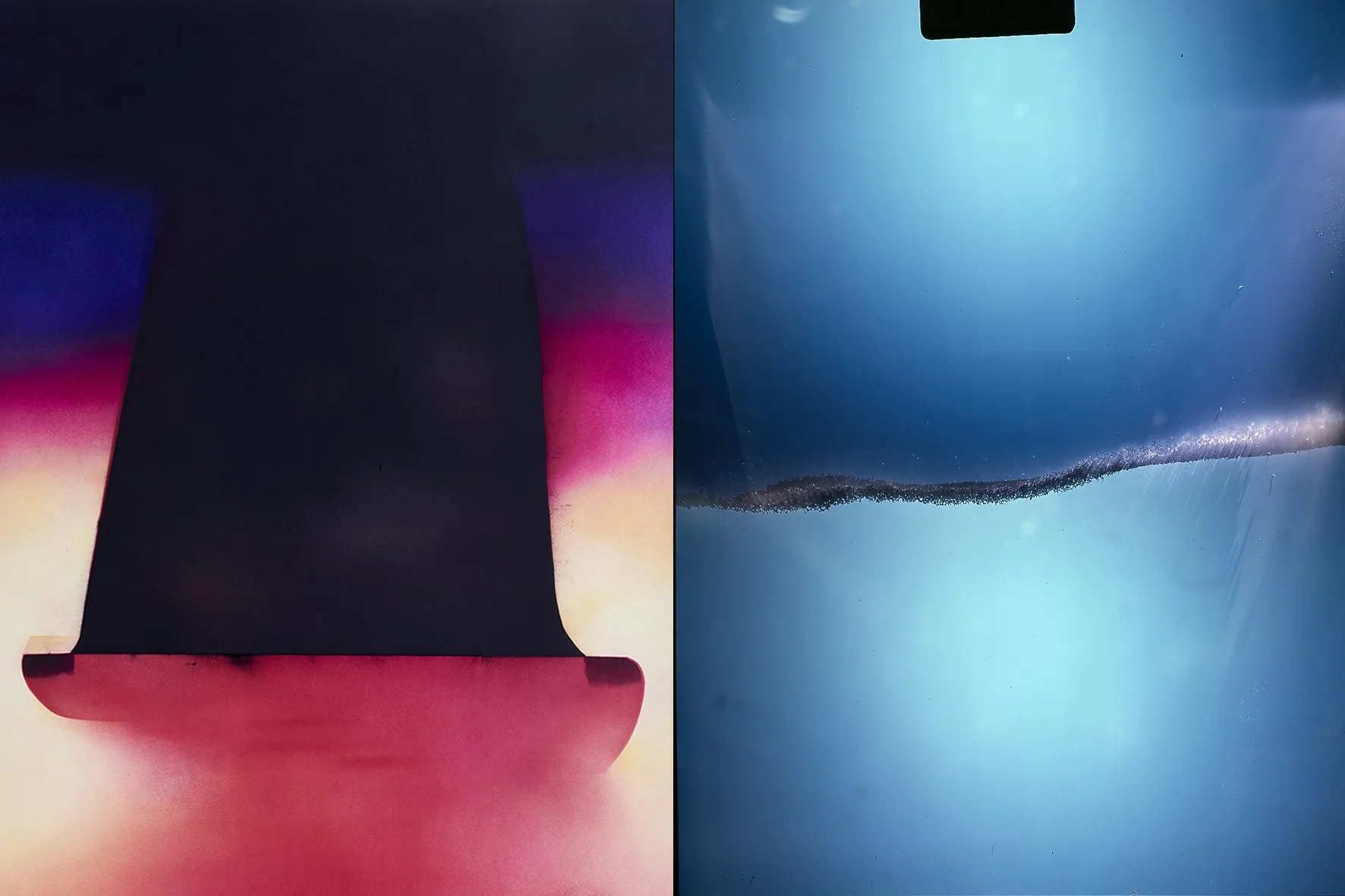
Lucciole, een duotentoonstelling van Edith Bories (F, °1984, woont en werkt in Brussel) en Liesbet Grupping (B, °1984, woont en werkt in Antwerpen), presenteert een poëtisch onderzoek naar de onvoorspelbare aard en precaire zichtbaarheid van fotografische beelden. Beide kunstenaars richten zich op de vluchtige of onvoorziene interacties van natuurlijke krachten met lichtgevoelig materiaal. Ze gaan in op de wisselvalligheid van fotochemische processen om fenomenen te onthullen die we met het blote oog niet kunnen waarnemen. Bories en Grupping werken vaak tegen het optische apparaat of omarmen de technische fouten die het genereert. Ze ontwikkelen een esthetiek van het incident die aantoont dat fotografie een dynamische energie is die nooit volledig gecontroleerd kan worden. Door aandacht te geven aan nabeelden, tussenbeelden en toevalsbeelden onderzoeken Bories en Grupping de handelingen en procedures die eigen zijn aan de fotografie vanuit nieuwe invalshoeken. Hun subtiele werken worden gekenmerkt door abstracte patronen, kleurverschuivingen, lichtvlekken, optische haperingen en printfouten. Ze stralen iets etherisch, bijna bovenaards uit maar vertonen ook de onmiskenbare sporen van hun stoffelijke oorsprong. De materiële eigenschappen van film, emulsie en (foto)papier – zoals textuur, glans, densiteit, ... - vermengen zich immers met het diafane karakter van de motieven (waterdamp, kleurzweem, zonnevlek). Het opnameproces zélf maakt in die mate deel uit van het beeld dat het onduidelijk wordt of wat we zien een natuurlijk fenomeen weerspiegelt dan wel door de technologie van het apparaat tot stand is gekomen. Hoe meer fotografie zich buigt over haar eigen condities, hoe minder het medium zich plooit naar de menselijke blik. En hoe moeilijker het ook wordt om te herkennen waar de representatie eindigt en de technische ruis begint. Verschijnen en verdwijnen zijn in de praktijk van Bories en Grupping dan ook dialectisch met elkaar verbonden. Door op de buitenranden van de fotografie te werken, zoeken beide kunstenaars juist de omstandigheden en methoden op die het zichtbaar-maken van de dingen tegelijk bevorderen en verhinderen.
Accidentele of experimentele lichtregistraties leggen vaak bloot wat normaal verdwijnt in de ogenschijnlijke transparantie van het fotografische medium. Bekijken we een geslaagd, figuratief beeld, dan vergeten we drager, emulsie, papier; we kijken er door en zien enkel wat erop afgebeeld staat. Gaat er echter iets mis (waterschade aan een film, een scheur in het (foto)papier, luchtbelletjes in de emulsie), dan verstoren de basiscomponenten de leesbaarheid van het werk. “Het ongeluk belicht een eigenschap in een ding die normaal gemaskeerd wordt door een meer prominente eigenschap van datzelfde ding wanneer het goed functioneert,” aldus Paul Valéry. Ook al werkt het fotografische apparaat naar wens, toch is de kans op een storing in het systeem nooit volledig uit te sluiten. Dit potentieel om te mislukken, dat altijd en impliciet aanwezig is in haar materialen en processen, is dan ook een wezenlijke eigenschap van de fotografie. Paul Virilio noemt dit het oorspronkelijke ongeluk dat elke technologie vanaf het begin met zich meedraagt. Ieder technisch proces produceert via zijn programma’s specifieke ongelukken. De uitvinding van de auto, zo stelt Virilio, betekent het tot stand komen van het auto-ongeval. De ontwikkeling van het vliegtuig impliceert het ontstaan van de vliegtuigcrash. De ontdekking van de fotografie leidt tot het in zee tuimelen van Bories’ fotocamera (film accidents), de drukfouten in Gruppings Sun (error) en de overstraling in een te lang belichte vlakfilm (Blanca). Zulke ongelukken overkomen de fotografie niet van buitenaf, ze zijn er origineel in inbegrepen. Virilio stelt dan ook voor om zowel de vooruitgang van een techniek als de bijbehorende geschiedenis van haar mislukkingen, storingen en defecten in acht te nemen. Om vanuit de fout een alternatief verhaal van de fotografie te schetsen. En dat is precies wat Bories en Grupping doen. Misschien valt hun oog ook op bepaalde vormen van fotografisch ervaren en falen omdat ze op het punt staan te verdwijnen. Werken met lichtgevoelige film is in deze digitale tijden bijna media-archeologie geworden. Overbodig en achterhaald, net zoals de typische ongelukken die ermee gepaard gaan. Nieuwe fototechnieken lokken mislukkingen uit die zich anders manifesteren. Ook in die zin werken beide kunstenaars gestaag verder aan een heel persoonlijke index van het fotografische beeld.
De titel Lucciole is ontleend aan Georges Didi-Hubermans essay Het voortleven van de vuurvliegjes , waarin hij de metafoor van het vuurvliegje als teken van weerstand gebruikt. In zijn poëtisch pleidooi drukt de auteur op het blijvend belang van beelden die zich verzetten tegen de dwang van de consumptiemaatschappij en een alternatief bieden voor het hapklare infotainment. Niet de felle spots van het schreeuwerige spektakel maar het dwalende, nachtelijke glinsteren van de vuurvliegjes, de lucciole, verdient onze aandacht. Voor Didi-Huberman is een beeld van nature vluchtig, broos, aarzelend en nooit absoluut. Zoals het beweeglijke, haperende licht van de lucciole kan het stilletjes voortleven en later, in een nieuwe configuratie, terug opflakkeren. Zulke vuurvliegjes-beelden, zoals Didi-Huberman ze noemt, bieden een noodzakelijk tegengewicht door op een onverwachte manier onze zintuigen en gedachtewereld te prikkelen. Bories en Grupping maken vuurvliegjes-beelden die hun eigen fragiliteit en tijdelijkheid als uitgangspunt nemen. Vanuit een tegendraadse verwondering zetten deze lichtvonkjes aan tot het bevragen van onze eigen ideeën over wat fotografie zoal kan en mag. En zo openen er weer nieuwe denksporen om met en over beelden te reflecteren.
Dominique Somers, april 2025.
//
E
Lucciole, a duo show with works by Edith Bories (F, °1984, lives and works in Brussels) and Liesbet Grupping (B, °1984, lives and works in Antwerp), presents a poetic investigation into the unpredictable nature and precarious visibility of photographic images. Focusing on the ephemeral or accidental traces that are inscribed upon light-sensitive materials, both artists engage with the vicissitudes of photochemical processes to reveal phenomena that otherwise remain obscured. Working against the apparatus or embracing the technical disruptions it engenders, Bories and Grupping elaborate an aesthetic of the incident that proves photography is a dynamic force of nature which can never be fully controlled. Through experiments with after-images, intermediate images and accidental images, Bories and Grupping explore the actions and procedures inherent to photography from new angles. Marked by abstract streaks, colour shifts, light specks and optical defects, their subtle works are characterized by an ethereal, almost otherworldly radiance, yet also show the unmistakable imprints of their tangible origins. The material conditions of the film, the emulsion and the (photographic) paper – texture, gloss, density, … - intermingle with the diaphanous qualities of the motives depicted (water vapour, colour field, sunspot). The recording process itself permeates the image to such an extent that it becomes unclear whether what we see reflects a natural phenomenon or has been created by the technology of the apparatus. The more photography folds back on its own conditions, the less the medium conforms to the human gaze. And the harder it becomes to determine where the representation ends and the technical noise begins. Appearance and disappearance are therefore dialectically linked in Bories’ and Grupping's practice. Working on the fringes of photography, both artists seek out the conditions and methods that simultaneously promote and prevent the coming-into-being of images.
Accidental or experimental light recordings often expose what normally remains latent in the apparent transparency of the photographic medium. Looking at an unimpaired representational image, we tend to forget about the existence of its substance and mediation (film base, sensitive layer, paper); we look through them and see only what is depicted. However, when something goes amiss (a water-damaged film, a tear in the (photographic) paper, dust particles on the emulsion), the basic components disrupt the legibility of the image. ‘The accident highlights a quality in a thing that had been masked by another of its more prominent qualities when functioning properly,’ Paul Valéry writes. Even when the photographic apparatus works as it should, the possibility of a fault in the system can never be completely ruled out. This potential to fail, which is always and implicitly present in its materials and processes, is therefore an essential property of photography. Paul Virilio terms this the “original accident” that accompanies every technology from its inception. Each technical process causes specific accidents through its own workings. The invention of the car, Virilio argues, implies the creation of the car collision. The development of the aeroplane entails the emergence of the plane crash. The discovery of photography leads to the tumbling into the sea of Bories' camera (Film Accidents), the printing glitches in Grupping’s Sun (error) and the flaring of a sheet film due to overexposure (Blanca). Such accidents are not merely inflicted upon photography by external factors, they are originally embedded in the medium. Virilio therefore proposes to consider both the progress of a technique and the corresponding history of its failures, malfunctions and breakdowns; to sketch an alternative story of photography from the perspective of its disruptions. And that is exactly what Bories and Grupping tend to do. Perhaps they also favour certain forms of photographic incidents because they are on the verge of disappearing altogether. Working with analogue film has nearly become media-archaeology in this digital day and age. Obsolete and outdated, as are the typical mishaps associated with it. Novel photographic techniques provoke failures that manifest themselves in different ways. In this sense, too, both artists are developing a very personal catalogue of the photographic image.
The title Lucciole is derived from Georges Didi-Huberman's essay The Survival of the Fireflies , in which he turns to the image of the firefly as a metaphor for signs of resistance. In a poetic appeal, the author presses the unwavering importance of images that resist the pressure of the consumerist society and offer an alternative to commodified infotainment. Not the blinding spotlights of flashy spectacles but the wandering, nocturnal glimmer of fireflies, the lucciole, deserves our attention. For Didi-Huberman, an image is fleeting, fragile, erratic and uncertain by nature. Like the elusive, flickery lights of the lucciole, it can quietly live on and flare back up, in a new configuration, at a later point. Such firefly-images, as Didi-Huberman coins them, provide a much-needed antidote by appealing to our senses and thought processes in unexpected ways. Bories and Grupping create firefly-images that are rooted in their own fragility and impermanence. Stemming from an unruly sense of wonder, these resistant apparitions of light encourage us to question our own ideas about what photography may mean and entail. This way, new trains of thought unfold to reflect with and on images.
Dominique Somers, April 2025.
https://doi.org/10.17613/pb3r5-btk09
Images © Edith Bories & Liesbet Grupping